
The Woman at the Well
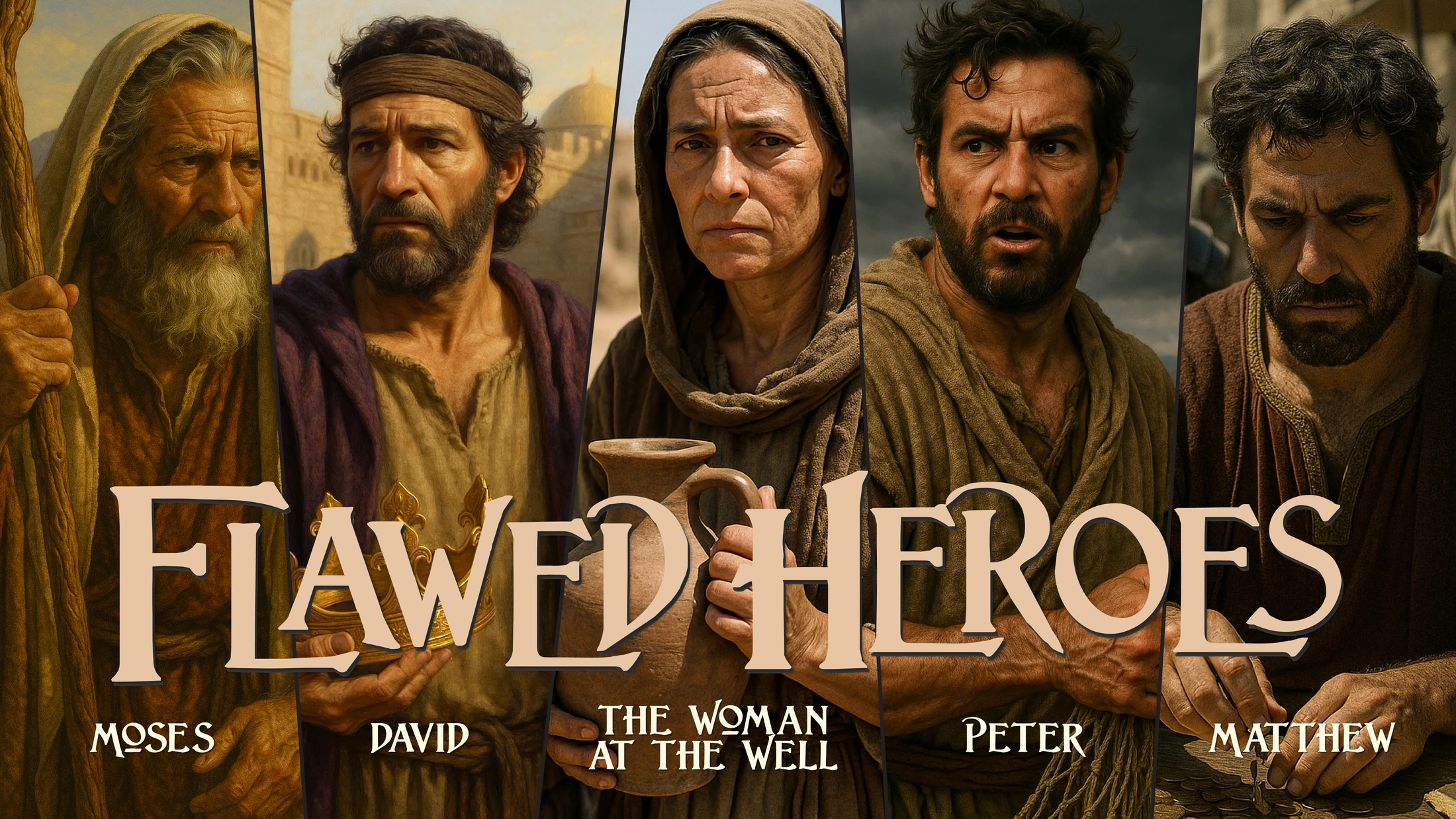
Good morning, Greenwood Christian. It's great to be with you today. It's been a great, exciting day of worship already and I'm always grateful to spend this time together on Sunday mornings getting our week started. We've had a lot of changes getting ready to happen. You've heard about summit.
We're excited about that tonight. Been praying about that. But one of the shifts that has happened with our student ministry activities moving primarily to Sunday evenings is we've had this growing section of students right down here on Sunday mornings at 11 o'. Clock. And we love having you guys in here.
Yeah, we're so grateful and we don't do assigned seating or anything like that around here, but I just want you to know, from the standpoint of anybody who ever leads from our stage, it is so encouraging to have people right here as opposed to a few rows back. So if you're ever wondering, should I move forward? Yes, yes, please. You should. That also helps people who are coming in late to more easily find a seat.
But we're excited to be together, we're excited about what God is doing, and we're looking forward to Summit tonight. I want to ask you this morning, have you ever found yourself just feeling out of place? Maybe your first day at a brand new school or at a new job in a new city? Or maybe like a yellow shirted Pacers fan in Oklahoma City surrounded by thousands of blue jerseys? I remember watching some of those away games during the finals and there'd be like two people in yellow shirts just surrounded by this ocean of blue, like a milk bucket under a bowl.
Or maybe this is your first time in church for a while. Maybe it's your first time in church ever. And there's some things about being here right now that feel kind of strange and unfamiliar to you. If you're here for the first time, you're not alone. We're so grateful that you're here.
I've, I've met a bunch of first timers today and we're so thankful that you're here. But the story we're going to look at this morning, the next character in our Flawed Heroes series, is someone who knew all about feeling out of place. And we, we read her story in the Gospel of John, the fourth book in the New Testament, Chapter four. And to set the stage for John, chapter four. This is very early in Jesus ministry and he's already beginning to experience opposition from the Jewish religious leaders.
And he didn't want to see his mission interrupted or derailed by politics or power struggles. So Jesus made the decision to leave the region of Judea, which is southern part of Israel, and he went north to a place called Galilee with his disciples. And John chapter 4, verse 4 tells us that he had to go through Samaria in order to get there. Now we're going to put a map up on the screen. So I'm going to play meteorologist for just a second.
You've got Judea down here, you've got Galilee up here. Samaria is right here in the middle. And so typically, you would think that the natural way to get from Judea to Galilee would just be to make a straight line there. That didn't work because there was this history of bad blood between the Jewish people and the Samaritan people. Samaritans, for starters, were of mixed ancestry.
And so the Jewish people, on the whole just saw them as unclean and untouchable. Furthermore, Samaritans accepted only certain parts of the Old Testament, and they disagreed with the Jews about a number of different things, especially where the proper place to worship was. And for all of those reasons, Jewish people avoided. You can see Jerusalem down here. They just avoided Samaria.
If you were a Jew and you needed to go from Judea to Galilee, what you would do is you would flank the Dead Sea here. You would cross over the Jordan river into this place called Perea, travel north on the east side of it, and then once you got clear of Samaria, you would come back over. They would go way out of their way to avoid setting foot there. But Jesus went through Samaria. Now, it may be that Jesus was just trying to choose the most direct route between two points, but we also know that Jesus mission, his stated mission was to seek and save the lost.
And if you're going to seek and save the lost, you have to go where lost people are. So John chapter four tells us that Jesus came to a town and in Samaria called Sakar, near the plot of ground that Jacob had given to his son Joseph. Now, Jacob is a famous patriarch, a famous ancestor of the Jewish people. And we're told that Jacob's well was there. And Jesus, tired as he was from the journey, sat down by the well.
At this point in time, Jesus had walked roughly 20 miles and he was tired. So he found a well, which is a logical place. If you're a tired traveler and you need to take a breather and get a drink, it's a logical place to sit down. And we're told that at the time Jesus arrived at this well, verse six, it was about noon. When a Samaritan woman came to draw water, Jesus said to her, will you give me a drink?
And we're told, parenthetically here, that his disciples weren't with him at this moment because they had gone into the town to buy food. Now, there are several things about this encounter that were highly high, unusual. They may not be noticeable that way to us, but for starters, this was a culture in which, as a rule, women just had lower status than men. In fact, it was so much that way that men didn't speak to women in public. So this is already a weird thing that Jesus has engaged this woman in conversation.
But this woman was a Samaritan, which means that Jesus not only broke a gender code, he crossed a pretty solid line of racial prejudice. And Jesus didn't just speak to the woman, he asked her for a drink. And according to some ancient Jewish traditions, if you were a Jew and you drank from a cup or a ladle that had been used by a Samaritan, that meant that you immediately became ceremonially unclean. And typically, women would go to the well in the evening when it was cooler, so that they wouldn't have to lug heavy jars of water in the heat. But this woman came to this well during the hottest part of the day, right around noon, when no one else was likely to be there.
So this woman would have recognized immediately how odd it was that Jesus is speaking to her. Now, unlike the other four characters that we're looking at in this series, Moses and David, and next week, Matthew and the Apostle Paul. After that, scripture doesn't even tell us this woman's name. So just for fun, and just so I don't have to keep referring to her as the woman or the Samaritan woman who. Let's just call her Wilma Wells, shall we?
This is Wilma. So Wilma, the Samaritan woman said to Jesus, you are a Jew and I am a Samaritan woman. How can you ask me for a drink? Because she knew Jews do not associate with Samaritans. Jesus was breaking the rules, and Wilma knew that.
I mean, I can almost hear a little bit of sarcasm in her voice. Look, buddy, you Jews don't even give us the time of day. But you're thirsty. So now I'm worth talking to. But I don't think she expected what came next.
Jesus answered her, if you knew the gift of God and who it is that asks you for a drink, you would have asked him, and he would have given you living water. Sir, the woman said, you have nothing to draw with. And the well is deep. Where can you get this living water? Are you greater than our father Jacob who gave us the well and drank from it himself, as did also his sons and his livestock.
And Jesus answered, everyone who drinks this water will be thirsty again. But whoever drinks the water I give them will never thirst. Indeed, the water I give them will become in them a spring of water welling up to eternal life. And the woman said to him, sir, give me this water so that I won't get thirsty and have to keep coming here to draw water. Now if we were to rewind in our Bibles one chapter to John chapter three, we would find Jesus talking to a man named Nicodemus, who was one of those Jewish religious leaders that often had a dim view of what Jesus was doing and saying.
And Jesus talked to Nicodemus about something he called being born again. Now Jesus was talking about spiritual renewal when he said that, but Nicodemus was very literal in his thinking and he could only picture a woman trying to give birth to a full grown man. And all the moms in the room just cringed in unison. Right, so Nicodemus totally missed Jesus metaphor. And now here we are in John chapter four.
Just a chapter later, Jesus is standing next to a well where he's talking about living water that could lead to eternal life. And he's speaking metaphorically again. And like Nicodemus, Wilma thought so literally that she missed the point too. Living water, huh? Mister, you don't even have a bucket.
How's that supposed to work? Wilma did not get what Jesus meant, but she was intrigued. She was tired of carrying heavy jars back and forth. So this living water sounded like something worth checking out. Well, Jesus told her, go call your husband and come back.
I have no husband. She replied. And at this point in the conversation, Jesus went beneath the surface and he did what you and I might call meddling a little bit. Jesus said to her, you're right when you say you have no husband. The fact is you have had five husbands and the man you now have is not your husband, what you have just said is quite true.
Now I don't know about you, but when I've looked at different commentaries and I've heard different, different spins, different interpretations of this woman's situation, I've seen a lot of different scenarios sketched. I've seen this woman painted as a loose, promiscuous, love them and leave them type, which really fails to reflect how truly limited her options would have been in this part of the world at this point in history, in a society where men had the upper hand, it was far more likely that a man would abandon his wife than the other way around. I've heard it suggested that this woman was just really bad at relationships. And there are some of those people in the world. It's possible though, that she struggled with infertility and that husband after husband after husband had decided that if she couldn't give them children, she wasn't worth keeping around.
Or maybe she was just so poor and so insecure and so desperate that she had jumped repeatedly at what looked like love and acceptance and security, only to be repeatedly cast aside. We don't know all the reasons for Wilma's rocky relationship history, but I think it's a pretty safe bet that she felt out of place, unwanted, discarded, rejected. And that track record obviously carried with it a certain kind of stigma. I mean, remember she went to the well during the hottest part of the day when she was less likely to run into her ex husbands or the current wives or girlfriends of those ex husbands, or the nosy town gossips that like to watch everything that she did and then mutter to each other about it. Have you ever had a season in your life where your own sense of shame or embarrassment or humiliation or self doubt just caused you to withdraw and just try to avoid contact with people?
Well, one of the things that I love about this story is that Jesus knew Wilma's background and he wasn't put off by it. Jesus knew before she ever said a word that she had been married and divorced five times. Jesus already knew that she was currently shacked up with guy number six and he still wanted to talk with her. But for Wilma, this conversation was getting way too personal for her own comfort. So she tried to change the subject.
Sir, Wilma said, I can see that you're a prophet. Our ancestors worshiped on this mountain. But you Jews claim that the place where we must worship is in Jerusalem. Rather than continue discussing her living arrangements, this woman, she tried to bring up the ongoing debate between Jews and Samaritans about the proper place to worship. And that was a squirrel that Jesus was not prepared to chase.
He continued, woman, believe me, a time is coming when you will worship the Father. Neither on this mountain nor in Jerusalem. You Samaritans worship what you do not know. We worship what we do know. For salvation is from the Jews.
Jesus said, yet a time is coming and has now come, when the true worshipers will worship the Father in the spirit and in truth. For they are the kind of worshipers. The Father seeks God is Spirit, and his worshipers must worship in the spirit and in truth. Jesus acknowledged that God's plan really had begun with the Jews. That's Abraham and Isaac and Jacob.
But then Jesus stressed that God's kingdom is defined not by a location, not by an ethnicity, not by a gender, but by our authenticity in worship. God isn't just interested in Jews or men or Americans. God is for anyone, anyone who sincerely seeks and worships him. Even a Samaritan woman with such a low sense of self worth that she tried diligently to avoid contact with other people. I mean, Wilma was reclusive, but she was no dummy.
The woman said, I know that Messiah called Christ is coming, and when he comes, he will explain everything to us. Wilma knew enough Old Testament prophecy to anticipate the arrival of a Messiah who would lay a whole bunch of spiritual mysteries to rest. But she wasn't ready for what came next. Then Jesus declared, I the one speaking to you, I am he. And that was remarkable because Jesus was usually so discreet about his identity.
If you've read through the Gospels before, you know that Jesus didn't typically walk around saying, son of God coming through. He didn't advertise that at all. In fact, the Gospels record for us only one time prior to Jesus arrest, all the way at the end of his ministry, right before his crucifixion, when he plainly revealed himself as the Messiah. And that one time is right here in John chapter four. Think about that for a second.
For three years to thousands upon thousands of people, Jesus typically called himself the Son of Man. But here In John chapter 4, he clearly revealed his identity to, of all people, an outcast Samaritan woman. Jesus was born to a Jewish mother in fulfillment of Jewish prophecies. But his focus was always, always, always global. Jesus came to seek and save all people.
Well, just then John tells us his disciples returned and they were surprised to find him talking with a woman. But no one asked, what do you want? Or why are you talking with her? Again, if you've read through the Gospels, you know that several of Jesus disciples had a really strong knack for speaking first and thinking later. And the fact that they didn't know what to say and that they didn't say anything here at all indicates just how shockingly countercultural Jesus conversation with Wilma was.
Now, at this point in the story, it's not hard to see some of the ways in which Wilma, I mean, her life was obviously very messy in certain ways, but if you'll recall, this series isn't called Flawed, it's called Flawed Heroes. And the rest of Wilma's story is why I consider her a hero. Verse 28 says. Then leaving her water jar, the woman went back to the town and said to the people, come see a man who told me everything I ever did. Could this be the Messiah?
They came out of the town and made their way toward him. Now do you remember why Wilma went to the well in the first place? To get water. And at this point in time, that mission has been completely abandoned. She left her jar behind.
She went home. She told others about this man who seemed to know everything about her and who just might be, in her opinion, the long awaited Messiah that the prophets had been talking about for centuries. And don't miss this next part. We're told in verse 39 that many of the Samaritans from that town believed in him because of the woman's testimony. He told me everything I ever did.
Jesus broke the rules and he talked to a Samaritan woman. And that encounter not only changed her life, it changed her entire village. She told others about Jesus. More people came to hear him and they believed too. And suddenly that awkwardness and suspicion that always had separated Jews from Samaritans just went out the window.
Verse 40 says, so when the Samaritans came to him, they urged him to stay with them and he stayed to days because of Wilma. Jesus became a welcome guest among Samaritan people who would normally have told him to just keep on walking and look at what happened during that two day visit. Verse 41. And because of his words, many more became believers. They said to the woman, we no longer believe just because of what you said.
Now we have heard for ourselves and we know that this man really is the Savior of the world. Jesus changed the life of one woman. She told others about him and they wanted to know more. And once they got to know Jesus, they were no longer just secondhand observers of Wilma's faith. They became believers themselves.
They now had Jesus stories of their own to share with other people. Wilma's life really illustrates for us three important realities, the first of which is this. Jesus is not afraid of our flaws. Let me say that again. Jesus is not afraid of our.
He is not afraid of your or my flaws. There might be some things about Wilma's story that you find personally relatable. Perhaps there have been times in some of our lives when we have felt discarded too. Maybe you feel like you've Lived your entire life in the shadow of a golden child older sibling that just never seemed to do anything wrong and you couldn't quite stack up. Or maybe you feel pretty unnoticed and passed over at work.
You show up every day and you do your job but nobody seems to notice and promotion after promotion just passes you by. Or maybe you felt pretty invisible ever since your mom or your dad got remarried and you now feel like you are competing on a regular basis with a new spouse or with a new set of step siblings for your parents attention. Or maybe you've been used and discarded by someone who at one time frequently said I love you. Maybe you know what it's like like Wilma to be abandoned by a spouse. I don't know the circumstances but if you have ever felt discarded and unwanted, I'm so sorry.
Nobody should ever have to feel that way. But whatever your story, I want you to know that that is not how Jesus sees you. What we see over and over and over again in the life of Jesus is that he didn't just come to call honor students and all stars. Jesus didn't just come for the pretty and the popular. He didn't come just for the successful and the spiritually healthy.
Jesus came to invite all people, flawed and and broken and sinful and messy and screwed up as we all are, into a relationship with God. And for that reason stuck up self righteous people often did not approve of Jesus friends. Case in point, there was a time when some Jewish leaders noticed that Jesus often shared his meals with just a group of people they categorically referred to as sinners and tax collectors, people just widely regarded as immoral and less than. And they asked his disciples why Jesus hung out with such losers. And Jesus said it's not the healthy who need a doctor, but the sick.
Hello. I've not come to call the righteous but sinners Jesus calls the receptive, not just the successful. And because that's true, so is this. Number two. Jesus is always ready to change our story.
Now we are not always eager to surrender our lives to him, but he is always ready to come in here. In John chapter 4, Jesus met a woman who was theologically confused. She was emotionally scarred. She was desperate for validation from men. He knew that she was lost.
He knew her life was a mess. But he didn't avoid her. He engaged her anyway. Now we know from Wilma's story that Jesus was far from the first man who had ever talked to her. But he may have been the first to ever treat her with real love, with real Compassion with real dignity.
And when he did, he rewrote her story in a way that changed an entire town. Jesus calls the receptive, not just the successful. Jesus is able not only to transform us and to rewrite our stories, but through us, to begin rewriting other people's stories as well. And that's because, number three, we are each uniquely positioned to connect other people to Jesus.
Curious, just by show of hands, how many of us in this room grew up going to church? Okay, that's a lot of us. That's a lot of us. Some of us were just brought up in church by our parents. So we've known about Jesus for essentially our whole lives.
There may have been a moment in time when we made a decision to follow him. And that wasn't so much a total redirect of our lives as much as just embracing as our own something we had already been brought up Believe my story is very much like that, and I'm sure that's true for many of you. But let me ask this. How many of us in here didn't grow up going to church? There are a lot of hands in that category as well.
Some of us know about Jesus only because somebody at some point went out of their way to introduce us to Him. Now, can you imagine, if you're one of those people who didn't grow up in the church, how different your life would be right now if that conversation had never taken place, if that relationship had never been extended to you? There are a lot of people in our community, people we go to school with, people we work with, people we live next door to or across the street from, people we bump into at the gym or see at the coffee shop who don't know Jesus. They may not be close to anyone who is a follower of Jesus. Scripture calls that being lost.
And unless we help lost people find their way to Jesus, it's likely they will spend eternity in that same place of distance from him where they live right now. So what do we do? Do we avoid them because we don't approve of certain aspects of their lifestyles?
Do we sit back and hope that somehow they find their own way to Jesus? Do we hope that if they do, they take all their mess to some other church? Let me ask another way. We just finished up the first week of school for a lot of our students. Can you imagine this last Tuesday or Wednesday, a teacher telling her room full of kindergarteners on their first day of school?
Wait, you guys are illiterate? Well, that's going to be a problem. Why don't you come back when you can read? Or could you imagine a financial planner telling somebody, your money is a mess? Why don't you get your accounts balanced and your debts paid off and then come see me?
Or can you imagine a personal trainer telling a potential client, holy cow, you are overweight and out of shape. Why don't you lose a few pounds and then we'll talk? Of course not. We help people by meeting them right where they are. Jesus calls the receptive, not just the successful.
If we're going to follow and obey Jesus, we don't have the option of telling people, yikes, your life is full of messy stuff I don't really even want to think about. Why don't you go and get your life in order? Why don't you get your stuff together and then come and join us? We don't have that option. Jesus calls the receptive, not just the successful.
There are a lot of different things about all of us here in this room this morning that are different. We could make long lists of some of the things that are unique about me. Maybe not true of very many other people, but there are at least two things that are universally true of all of us. And here's the first. Jesus loves you.
I don't have to know a thing about your life to say that with absolute certainty. Jesus sees each and every one of us with the same compassion that led him to seek out a lonely, thirsty Samaritan woman named maybe Wilma. I mean, whether or not you feel at ease in your own skin, whether or not you feel loved by your own family, whether or not you feel accepted by your peers, Jesus loves you and he welcomes you. Jesus loves each of us so much that he died that he put on flesh, and he died to rescue us from the sin and the mess in our lives. And the reason the church exists, the reason Greenwood Christian Church and any other local congregation exists, is to help as many people as possible know Jesus in a personal way.
Jesus isn't looking for people who have it all figured out, who are successful, who have pulled themselves up by their own bootstraps and gotten their act together. He's looking for people who are receptive. Are you receptive? Is he welcome in your life? There's no question that Jesus loves you.
And here's the second thing that I know is true of all of us. Jesus wants to change the world through you and through me. If you know Jesus, then you have personally encountered the compassion of God. And that means that you have a story of how God's love has impacted your life that other people need to hear and created an opportunity to share that Jesus story could begin with walking across the street. It could begin with inviting a co worker to lunch.
It could begin with sitting down and in that seat next to that new kid on the bus and starting a conversation. It could begin with inviting a neighbor over for coffee or looking up from your phone. Perhaps in the past week, we had the opportunity just to celebrate some really cool moments. A week ago, after the service, I thought we'd had all the conversations we were going to have and I was ready to head home. And lo and behold, I learned that Adriana, who'd been coming with us for about a year, wanted to be baptized right then.
And she wanted her friend Cheryl, who brought her and her friend Cindy, who had been a real encouragement to her and Bible study, wanted them to baptize her. So we baptized. Adriana got to celebrate that with her last Sunday. A couple days later, I met a young man named Dustin who'd been attending with us for just a few weeks. Eric had noticed Dustin and had introduced himself, and they'd begun a conversation, begun meeting together, answering some questions, just looking at scripture together.
They've been studying together just that morning in Acts chapter eight, where a guy named Philip talked with a man from Ethiopia, and they came to a spot where there was some water, and the man said, look, here's water. What. What prevents me from being baptized right now? And that's what Dustin said Tuesday morning. So we gathered together and we celebrated that with him earlier this morning.
We saw the video a little while ago, but we got to see Jake baptize his friend Mackenzie. And Joel already told you that Jake flew in from Texas in order for that to be a reality. But mackenzie has been with us for several weeks, and she is bringing multiple friends with her every single Sunday. And every single one of those stories of life change began with someone who had a conversation that led to a friendship that led to spiritual influence. Who needs to hear the story what Jesus is doing in your life?
Who are those people who are living close to you but far from Jesus, who need to hear the story from you of what God is doing in your life and what he wants to do in theirs. Would you pray with me? Lord God, we thank you that you are a God who specializes in changing lives, that you don't expect us to have everything all buttoned down and put together before you welcome us, that you see us in the depths of our sin and our messiness, our brokenness and you love us and you welcome us anyway. We thank you for your amazing sacrifice in our place to move that sin out of the picture so that we can enjoy the relationship with you that we were created for. And God, we gather this morning not only to celebrate your goodness to us, but to celebrate this history spanning story of your desire to do that very same transforming work in the life of every person.
And Father. All of us who know you are also in a place where we have connections, we have interactions on a regular basis with others who don't know you in the way that we do. And Father, we have. We ask that through your Holy Spirit that you would appoint conversations, that you would open doors, that you would allow us to cross paths with people at strategic times and give us the courage, give us the awareness, Father, the intentionality to share with others what you're doing in our lives, who you are and what you want to do in their lives as well. God, we ask that as a church, you would use us in that way and that the story of what you're doing would continue to be told again, again and again and again, through person after person, through generation after generation.
God, we thank you for your goodness and your faithfulness to that promise. And we ask you to use us in accomplishing it. We pray this in Jesus name, Amen. Every time we come together, we want there to be an opportunity to respond because Scripture is not just a mental exercise, it's. It's something God gives us to change our lives, to redirect us as his followers.
So just want you to know if you'd like to talk to someone, there are a couple of ways to do that. I'm going to invite our Next Step team to go ahead and come on up here toward the front of the room. If you're online with us or you're just in a hurry, just text the word next at any time to 317-707-997. We'd love to hear from you and be able to talk with you and help you figure out what next step God is calling you to take. And if you'd like to talk to someone face to face in person, there'll be several of us right down here along the front of the stage stage after the service and whether we can pray with you or answer a question or help connect you to people or resources.
Maybe you're ready to take the step that we just celebrated with McKenzie this morning and you're ready to surrender your life to Jesus or you have questions about what that means. You fill in the blank. We are here to help. We want to be a church that God unites as one with a heart for the one. And if this morning you identify and say, you know what?
I am the one, I am looking for Jesus, and I need help finding him. We'd love to be a part of that process. So great to be with you all today. Have a wonderful week, and let's take the name and the spirit, the intentionality of Jesus with us. God bless you all.