Serve Our City: Impact Week
Impact Week is September 14–19! Learn more and find your place to serve!

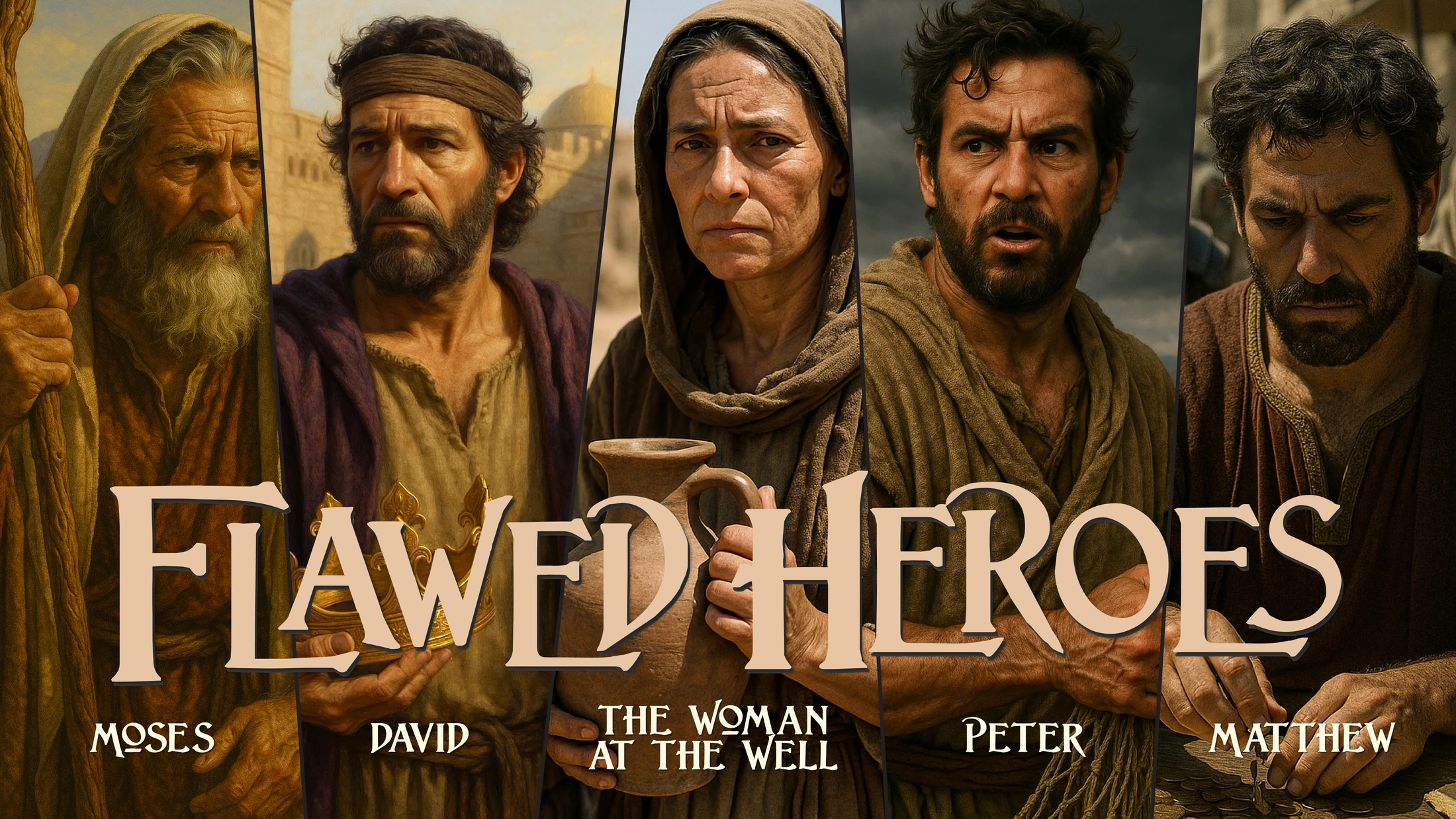
Good morning, friends. Sounds so epic, doesn't it? I mean, like coming soon to a church near you. I'm excited about this new series that we're kicking off today. We'll jump into that here in just a minute.
But before we get there, a couple of things I want to make sure that, you know, one of those is we have a mission team that is headed to Austria this week. We have a mission ministry partner called TCMI that is located right outside of Vienna. I've been there several times myself. It's one of my favorite places on earth. And we have a small team headed there middle of this next week.
So we want to pray for them during their travels. And then I want to make sure that you're all aware that yesterday morning our friend and brother Steve Poston was welcomed into the arms of Jesus. You know, Steve has served really faithfully until just recently as our executive minister. And all of us who know Steve and have traveled that journey with him know that he has modeled faith and hope and love and courage to the very end. And so as a church and as a staff team, we grieve the loss of our friend and we rejoice that he's no longer suffering or struggling, that he is now enjoying the reward that scripture says awaits all of us who belong to Jesus.
Now we plan to host a celebration of Steve's life this coming week, but they haven't been able to nail down the details of that just yet. So as soon as we have specifics to communicate, we'll push those out via email and social media and you'll be able to know what's going on. We would love for as many as possible of you to join us when that time comes this week in celebrating our friend Steve's life. Now, before we jump into the message today, could we just take a moment and pray together?
Father God, we come this morning grateful but with heavy hearts. Father, you know our prayers over the last number of months that our desire has been for Steve to remain here with us because we have loved and valued his friendship and his strategic leadership. And yet, Father, we. We can find absolutely no fault in the ultimate outcome because we know that Steve is at a place with you now where we would never possibly want to drag him back to this messed up world from what he's experiencing right now. But Father, Steve's absence leaves holes in a lot of people's lives.
And so we lift up his family and our church, his life group, our staff team. Father, all the different people that Steve has invested in in such important ways. We pray that you would help us to continue to lean into you for comfort, help us to encourage and bless one another. And Father, we're thankful that even in the midst of our grief that we have a message of hope. We're thankful that we have a team in just a few days headed to Austria to be a part of your international work of proclaiming that message around the world.
And we, we pray your safety and travel for them. We pray that you would keep them healthy, that you would energize them for the work that they're going to do there and that you would encourage and strengthen them by what they experience. God, we're so grateful to be together this morning as a part of your family. And we come to you, Father, grateful for that privilege. In Jesus name, amen.
The last word wins. Here's what I mean by that. John Wilkes Booth was an accomplished stage actor, but that's not what we remember him for, is it? What we associate with the name John Wilkes Booth more than anything else is his assassination of Abraham Lincoln. You know, as President Richard Nixon ended US involvement in the Vietnam War, he helped to improve relations with the Soviet Union and China.
He authorized the first moon landing. But that's not what he's remembered for. He's remembered mostly for the Watergate scandal that ended his presidency. O.J. simpson won the Heisman Trophy.
He was the first NFL player to rush for over 2,000 yards in a single season. He was a three time NFL player of the year. He was inducted into both the college and pro football halls of fame. And he's remembered most for being accused of his wife's murder. Harvey Weinstein co founded two successful film production companies.
He won an Academy Award and seven Tony Awards. And he's now most famous for sexual assault charges. See, the last word often wins. Flaws often overshadow accomplishments. And yet the reverse can also be true, can't it?
People can rise from the ashes of failure to do really meaningful things. And the Bible is full of those people. Flawed heroes we would call them, who surrendered their very imperfect lives to God and they found redemption and they were used in powerful ways. And for the next few weeks, we're going to take a look at a few of them, starting with Moses, who is one of the Bible's most famous and significant characters. The Old Testament books of Exodus and Leviticus and Numbers and Deuteronomy tell Moses story.
So today we're just going to sit back and we're going to unpack all four of those Bible books verse by Verse from start to finish. So I hope you packed a lunch. Actually, that's way too much text for us to try to bite off in the limited time we have. So what we're going to do is try to take a quick tour of a highlight reel of Moses life and then make some observations about it together in a big picture sense. Moses was born at a time when the Israelite people were enslaved.
Pharaoh, the king of the nation of Egypt, saw the Israelite population exploding. And to control their numbers and prevent them from getting any ideas about insurrection, he ordered that all of their newborn baby boys be thrown into the Nile River. But Moses mother defied the king's decree. She hid her baby for three months. Eventually, she placed him in a basket along the bank of the river, and Pharaoh's daughter came to that very spot to bathe.
She felt compassion for this baby in the basket. She adopted him. She gave him the name Moses, which in Egyptian means son, but in Hebrew means drawn out of the water. And by God's providence, Moses was spared from genocide and he was raised in the palace where he was educated in all the best knowledge of Egypt. Well, scripture then fast forwards to age 40.
Moses saw an Egyptian taskmaster beating a Hebrew slave. And in anger, he killed that Egyptian and he buried his body in the sand. And when Pharaoh learned about this, he wanted Moses dead. So Moses fled into the desert to a place called Midian, where he met a priest by the name of Jethro. Moses eventually married Jethro's daughter, Zipporah, and he and his wife had two sons together.
And Moses and his family lived for a good time there, for a good long time with Jethro. And Moses worked as a shepherd. Moses life took another really dramatic turn, another 40 years later. There's some really significant increments involving the number 40 in Moses life. When Moses was about 80 years old, he's out in the desert and he came across a bush that was on fire, but it did not burn up.
And out of those flames, God commanded Moses to go back to Egypt to confront Pharaoh and demand his people's freedom from slavery. So this is a very condensed version. Moses went and he relayed God's command to Pharaoh. Let my people go. And Pharaoh refused.
Rather than free the Israelites, the Egyptians made them work even harder. But God refused to be ignored. And he empowered Moses to call down devastating plagues that directly defied the gods of Egypt. And each time God sent a plague and Pharaoh stubbornly dug in and refused to back down, God sent yet another one. First, he turned the water in Egypt to blood.
And then he covered the land with frogs. He sent vast swarms of gnats and then flies. He sent a plague that devastated Egypt's livestock. He caused the Egyptian people to break out in boils all over their bodies. He sent hail to demolish the Egyptians crops, and then sent armies of locusts to devour what was left.
Next, he covered the land with a dense, heavy darkness. And finally God announced a night when he would pass through Egypt and take the life of the firstborn in every family.
But those who sacrifice lambs and mark their door frames with blood would be passed over and the Passover. That night became an annual celebration in Israel. It actually prophetically foreshadowed the death of Jesus, the Lamb of God, who would later be crucified at Passover to save all of us who trust him from death and hell. Egypt suffered incredible losses that Passover night, but the Israelites were spared. And Pharaoh finally saw, finally saw that it was pointless to fight against God.
And he told the Israelites to get out. So that very night, they began a mass exit from Egypt. And Exodus, which is where the second book of the Bible gets its name. But hearts don't change easily. And as soon as Pharaoh realized that what he had just done was kiss his free labor force goodbye, he sent his army after them.
The Egyptians caught up with the Israelites just as they reached the edge of the Red Sea. So God's people found themselves trapped between being dragged back into slavery and drowning. And they began to complain. God, did you seriously bring us out here into the desert to die? And Moses answered the people this way.
Do not be afraid. Stand firm and you will see the deliverance the Lord will bring you today. The Egyptians you see today, you will never see again. The Lord will fight for you. You need only to be still and fight for them.
God did. The angel of God stood all night between Israel and Egypt. And on that note, we need to hit pause for just a second because this is a significant thing to point out here. Scripture teaches that God exists eternally. No beginning, no end, and inseparably in three persons.
God the Father, God the Son, and God the Spirit. And that means that Jesus did not just pop into existence when he was born in Bethlehem. Jesus has always existed. And many Bible scholars believe that when we read in the Old Testament about the angel of the Lord, we're actually reading about an appearance of Jesus before he put on flesh and came to earth. So the angel of the Lord, perhaps Jesus himself stood all night between Israel and Egypt.
And God had Moses stretch out his hand, and he sent a strong wind that blew all night and divided the waters of the Red Sea and allowed the Israelites to walk across on dry ground. And when the Egyptian army decided and God allowed them to pursue, God threw the Egyptians into confusion and drowned them as the waters of the Red Sea converged, came back together on top of them. So God dramatically and undeniably had saved Israel from captivity again. But it wasn't long before they complained again about not having enough food and water. And God came through again.
He miraculously brought water out of a rock in the desert. He sent quail and manna, a sweet cake like bread that appeared on the ground each morning for the people to gather. Now, scripture tells us that after they were attacked by the Amalekite people and defeated them in battle, the Israelites came to one of those significant mountains that Cody referred to a few minutes ago. Mount Sinai. On top of Mount Sinai, God descended in thunder and lightning and smoke, and Moses went up to the peak of the mountain to meet with him.
Moses spent 40 days up on that mountain with God. And during that time, God gave him a library of laws to govern Israel, including what you and I call the Ten Commandments, which God wrote on tablets of stone. Well, as Moses, time with God on top of that mountain continued to stretch on, the people down below became more and more impatient. And they ultimately persuaded Moses brother Aaron to build them a golden statue in the shape of a calf. This still puzzles me to this day.
Even though they had personally seen God's miraculous protection at the Red Sea, they somehow decided to attribute their deliverance from Egypt to the false gods that this idol, this calf represented. And they bowed down and worshiped it. And God was so angered by Israel's actions that he threatened to wipe them out and start from scratch, to build a new nation out of Moses descendants. And Moses, in that moment, boldly pleaded with God to honor his promise. And God relented.
So Moses went back down to the camp, and when he got there and he saw his people worshiping around this golden statue like pagans, he threw the Ten Commandments to the ground in anger, and he broke them in pieces. And God punished the people so severely that over 3,000 of them died. Now, after that, for a time, at least, Israel followed God's commands to Moses. They followed his specifications he'd given in building this portable worship tent called the Tabernacle. They left Mount Sinai.
They headed north toward the land of Canaan that God had promised to give them. And when they reached the border, they sent out a team of 12 spies to do some recon and to gather intel on this land that they would have to conquer. Now, two of those spies came back, and they said, you guys, this land is everything we had hoped for and more, and God will help us take possession of it. But the other 10 came back and said, no way. The land's occupants are way too powerful for us to defeat them.
And the Israelite people listened to the majority, and they refused to enter. And because of their doubt, because of their disobedience, God condemned the Israelites to wander the desert for 40 more years before he would allow them to enter their new home. Meaning that nearly everyone who had made that trek across the desert to the threshold of that promised land would die in the wilderness and never get to see it. So as the Israelites wandered, as they traveled during this period of four decades, Moses continued to receive and to relay instruction from God. During that time, he dealt with rebellion.
He dealt with complaints. He dealt with repeated sin among the Israelite people in Numbers, chapter 20, as the people complained again about thirst. And God told Moses to speak to a particular rock and bring forth water. But Moses was so angry about the people's stubbornness that instead of speaking to the rock, he struck it with his staff twice. And God saw that as a failure to trust and to fully honor him.
And he declared that neither Moses nor his brother Aaron would enter Canaan either. So, 40 years after Israel had originally turned back from the Jordan river and that crossing into this promised land, God led them once again back to that same spot, to the border of Canaan. And Moses knew at this time that the end of his life was approaching. So he passed the baton of leadership to his friend Joshua, one of those two spies who, 40 years earlier had come back and reported that God is able to do what he's promised, and we can get this done. Moses gave final instructions.
He blessed the Israelites. And then, at the age of 120, he. He hiked alone to the summit of another mountain called Mount Nebo, where Moses took one last look at this land that he would never enter. And he died. And the nation of Israel mourned Moses death for a month.
Now, that is a very, very, very condensed version of a much longer story. Moses was a significant leader. He exhibited some moments of incredible courage and boldness. Moses met face to face with God. He spoke to him as a friend.
He received the law from him, and he wrote it down for us. The law of Moses governed Jewish life for centuries, all the way up until the time of Jesus. Moses was a prophet, and most Bible scholars believe that he wrote the first five books of the Bible, what we call the Pentateuch, Genesis and Exodus and Levitics, Numbers and Deuteronomy. The New Testament book of Hebrews, chapter 11, says this about him. By faith, Moses, when he had grown up, refused to be known as the son of Pharaoh's daughter.
He chose to be mistreated along with the people of God, rather than to enjoy the fleeting pleasures of sin. He regarded disgrace for the sake of Christ as of greater value than the treasures of Egypt, because he was looking ahead to his reward. By faith, he left Egypt not fearing the king's anger. He persevered because he saw him, who is invisible. By faith.
He kept the Passover and the application of blood so that the destroyer of the firstborn would not touch the firstborn of Israel. By faith, the people passed through the Red Sea as on dry land. But when the Egyptians tried to do so, they were drowned. Moses was a hero, and he was flawed. Moses had some impulsive tendencies.
He had a temper that sometimes led him to do rash things, like killing that Egyptian or striking a rock after God had clearly told him to simply speak to it. Early on, Moses doubted both God and himself, and he made excuses. Moses was born a Hebrew. He was raised as an Egyptian, and then he fled into the desert, and he lived as a Midianite for a number of years. So he probably faced an identity crisis of sorts as God called him back to Egypt to speak truth to power.
And we see some of this uncertainty in Moses played out for us, really, specifically in Exodus chapters three and four, where we read that the angel of the Lord, again likely an appearance of Jesus, appeared to him in flames of fire from within a bush. Moses saw that though the bush was on fire, it did not burn up. So Moses went in for a closer look. And if you grew up in Sunday school, you've heard this story many times before. God called him by name.
He told him to take off his sandals because he was standing on holy ground. Then God said this. I have indeed seen the misery of my people in Egypt. I've heard them crying out because of their slave drivers. And I am concerned about their suffering.
So I've come down to rescue them from the hand of the Egyptians and to bring them up out of that land into a good and spacious land, a land flowing with milk and honey. And now the cry of the Israelites has reached me, and I have seen the way The Egyptians are oppressing them. So now go. I am sending you to Pharaoh to bring my people, the Israelites, out of Egypt. God's mission and his command and his power and his promises were clear.
And yet Moses dragged his feet. Moses began by saying, I'm the wrong person for the job. Moses said to God, Exodus 3:11. Who am I that I should go to Pharaoh and bring the Israelites out of Egypt? Why me? I'm nobody special.
Surely there's somebody else in this large nation of people better qualified than I am. And God simply said, I will be with you. Now don't get me wrong. It's entirely possible to be the wrong person for the job. I mean, if you can't do math, you're probably not CPA material, right?
If you pass out at the sight of blood, you probably don't have a future in vascular surgery. If you're five feet tall, you're probably not going to cut it in the NBA unless your name is TJ McConnell, right? There are exceptions, but for the most part, there are certain factors that would just cause us to say that this person is the wrong person for the job. But what we see here is that what God calls us to do, he walks with us through life, is never up to just us and our abilities. God goes with us.
God knew that for Moses, standing in front of Pharaoh and demanding his people's liberation would be intimidating. So he didn't send him alone. He went with him. He predicted that Pharaoh would balk at Moses request. And he promised to display such power that Pharaoh would be compelled to back down.
But Moses still wasn't sold. So he brought up excuse number two. What if my own people don't believe me? Moses said to God, okay, suppose I go to the Israelites and say to them, the God of your fathers has sent me to you. And they asked me, what's his name?
Then what shall I tell them? God said to Moses, I am who I am. This is what you are to say to the Israelites. I am has sent me to you. God also said to Moses, say to the Israelites, the Lord, the God of your fathers, the God of Abraham, the God of Isaac, and the God of Jacob has sent me to you.
This is my name forever. The name you shall call me from generation to generation. God's name is I am not, I was not, I will be, but I am. God is eternal. He is not confined by time and space like you and I are.
That means that all times are present tense to him. That means that at this very moment. God can see our world being created. He can see Moses making excuses. He can see the moments of Jesus birth and death and resurrection and his future return.
And he's right here with us all at the same time. And because God is timeless, he is all knowing, and nothing catches him off guard or takes him by surprise. God reminded the Israelites that he was not just their God. He. He was keeping promises that he had made centuries earlier to their ancestors, Abraham, Isaac and Jacob.
He knew all about their suffering in Egypt, and he was going to deliver them. He was going to take them to a new and better home. But Moses still wasn't convinced. So he raised excuse number three. Well, what if the Egyptians don't believe that you sent me?
Moses answered, what if they do not believe me or listen to me and say, the Lord did not appear to you? So God gave Moses miraculous signs as proof. God anticipated their skepticism, and he demonstrated his power to Moses. He had Moses throw his staff on the ground, and it became a snake. And when Moses grabbed that snake by the tail, which I don't recommend, it became a staff again.
God had Moses put his hand inside his cloak. And when he pulled it out, it was covered with leprosy. And when he reached back into his cloak, his hand became healthy again. God told Moses that if Pharaoh managed to ignore both of those miracles, he should take some water from the Nile river and pour it out on the ground, and it would turn into blood. So Moses did a demonstration of all of these signs to the people of Israel before he ever went to see Pharaoh.
And God told him, this is so that they may believe that the Lord, the God of their fathers, the God of Abraham, the God of Isaac, the God of Jacob, has appeared to you. But Moses still wasn't finished. Next, he told God, I'm not much of a speaker.
Moses said it a little more delicately. He said, pardon your servant, Lord. I have never been eloquent, neither in the past nor since you have spoken to your servant. I am slow of speech and tongue. Now, we don't know whether this was just insecurity talking or whether Moses actually had a speech impediment of some sort.
But in response, God reminded Moses that he is the one who gives hearing and speech and sight. And God promised that he would give Moses what he needed to say. And after all of Moses other objections, the fundamental issue finally bubbled to the surface. And here's what it was. It was unwillingness.
Moses told God, I don't want to go now. He said it more politely, Pardon your Servant, Lord, please send someone else. And by this point, God became angry with Moses stubbornness. But he also remained committed to rescuing Israel. And rather than replace Moses with somebody off the Israelite bench, God sent along Moses brother Aaron, who was a good speaker and promised that he would help both of them say exactly what God wanted.
Said God provided Moses a teammate to share the task of leadership. And any of us who work in a team leadership environment recognize the power of that at a personal level. I am deeply grateful for our church's staff and elders who lead alongside me, especially during really challenging seasons like the one we're in right now. Finally, after all of his excuses, Moses submitted and he went, think about that. Most of what Moses is famous for, leading Israel out of Egypt and receiving the law from God, came after this conversation that was so chock full of objections.
At first, Moses wasn't fully convinced that God could do through him all that he had promised to do. But Moses ultimately chose to trust and follow God. If Moses had dug in and stuck with his excuses, the rest of his story would have been very different. God would probably have chosen someone else to lead Israel. But if he had, you and I wouldn't even know the name of Moses, we wouldn't be talking about this right now.
The last word wins. Now, have you noticed how good we often are at making excuses?
We don't always say these things out loud, but we at least think them. You know, I know prayer is important, but I'm just so busy not even really sure what to say. Or I know fellowship is important, but Sunday's my only day to sleep in. I know God values generosity, but there's still so much stuff I want to buy for myself. I know God desires honesty, but in my business, it's pretty hard to get ahead without cutting a few corners.
I know God desires sexual purity, but we still plan to live together before we think about getting married. I know there are people around me who need to know Jesus, but I am more comfortable, quite frankly, just hanging out with my safe Christian friends. I know God is calling my child to ministry, but I would rather they pick a higher paying job. Now, I could go on, but I think you get the idea. Moses discovered and we need to learn that God's best work in our lives lies on the other side of our excuses.
Let me say that again. God's best work in our lives lies on the other side of our excuses. God answered Moses excuses. Did you notice this? God answered Moses objections and excuses.
Not by saying, Moses, you've got this. You can do it. You're good enough and you're smart enough. Doggone it, there are at least a couple of Israelites who like you. That's not what God said.
God said, I've got this, Moses. I will be with you. And that reminds me of Jesus last words to his disciples. He gathered them on another mountain and he said, all authority in the heaven and on earth has been given to me. Therefore go and make disciples of all nations, baptizing them in the name of the Father and of the Son and of the Holy Spirit and.
And teaching them to obey everything I've commanded you. And surely I am with you always to the very end of the age. In a nutshell, Jesus said, I am in charge, guys. I am Lord, and I have every right to tell you how to live your lives. I know best.
Jesus reminded his disciples that he loves us. He loves the entire world. And he wants every person in the world to be. To have the opportunity to know him and be saved from sin and death and hell. And he wants to use all of us, his disciples, as the primary communicators of that message.
And the best part is this. Jesus made clear to his disciples and to us that he doesn't expect us ever to tackle that mission alone. His spirit goes with us always. And that's a really huge deal. Because you've probably noticed, like I have, that flawed people are the only kind of people there are.
We've all veered off the path of perfection. And that means that our way forward is never about our abilities alone. It's about trusting God to work through us and to do what only he can. God works through imperfect but fully surrendered people. The last word wins.
So what matters is not how badly we've screwed up in the past, but what we do next. God specializes in redeeming and using broken, messed up people. So let me ask you, friends, are there regrets in your life from your past that you need to give to God? Are there moments you look back on and think there is no recovery from that? There is no redeeming that?
If you have some moments like that in your life, I just want to challenge you this morning. Give those to God. He's more than big enough. The cross is more than big enough to deal with that. Are there areas of your life that you have yet to fully surrender to Jesus?
Many of us have areas that we're glad to give to Jesus. Those are the easy things to let go of. But we often carry around certain things that we just want to retain ownership of. And if we're going to be his disciples. If we're going to follow him, we have to give him everything.
So maybe there's something in your life that needs to be surrendered. Maybe we're like Moses and we have some excuses, some well rehearsed excuses that whether we say them out loud or not, we. We continue to hang onto them, we continue to internally recite them, and they hold us back from fully following Jesus in the places that he's calling us to go. I don't know whether that speaks to you or not, but I'm confident that this issue of making excuses, this issue of being held back by regret, this issue of incomplete surrender, this is the battleground where we live our lives and we contend with that on a regular basis. What next step is God calling you to take?
On the basis of what we see played out here in the life of Moses. Would you pray with me?
Heavenly Father, we thank you this morning for your goodness to us. We come together today not as a group of people who have it all together, people who have achieved our way into this belonging in your family. Father, we come as people who are our beggars, desperate for your mercy and thankful for your grace. We're grateful, Father, for the example of people like Moses who shine out to us. Not because he always did everything right, but because the last word in Moses life was one of obedience, one of surrender.
And God, we have no perfection to offer you. But we're thankful for the lives you've given us. Thankful for the gifts and abilities and experiences and skill sets, the connections that you've given to each one of us. And we ask that you would help us, God, to fully give all of that to you and to allow you to do through it what you desire. And we pray, Lord, that you would give us the humility, the selflessness, the courage to give you everything, to follow you, to obey, to trust that what you have in store for us is better than anything that we could choose or accomplish on our own.